Tuesday, May 31, 2016

LIBERTY PUBLIC MARKET - VINTAGE FOOD HALL


LIBERTY PUBLIC MARKET-SAN DIEGO


JEAN & CAROL
OLD FRIENDS -VINTAGE BUILDINGS
My friend Jean said her sister, Carol, would arrive at the San Diego International Airport about noon on a Wednesday. We decided to meet at the Liberty Public Market (2820 Historic Decatur Road) for lunch—a five minute drive west of the airport. This is one of the new and trendy places in San Diego, located in the northeast corner of Liberty Station, Point Loma.

     Interestingly, the new Liberty Public Market is located in the original Navy Mess Hall, one of the first buildings constructed at the San Diego Naval Training center in the early 1920s. The $3 million project offers more than 24 food and beverage vendors and a choice of inside or outside seating in a renovated historical building with high ceilings and impressive white wooden rafters.

       This is my second visit to the market. The first time was on a Sunday afternoon in April and it was crowded. The lines for food were too long, tables were almost impossible to find, and it was noisy. We did not stay.

     
PLEASANT SEATING
     I looked forward to giving it another try on a weekday. It was much better, although seating was still somewhat limited, but the lines were short and there was more time to leisurely appreciate the nearly one-hundred-year-old structure. We found a pleasant long table located inside near the AE Floral shop. Here we could comfortably visit the afternoon away. We took turns heading out to explore the many food choices, and we all tried something different.
      
CHICKEN PAD THAI
I tried the lobster roll ($16) with hot melted butter on a toasted roll with French fries from the Wicked Maine Lobster, it was delicious. Jean had a endless summer salad ($9.50) which was also good. Carol chose the chicken pad Thai ($9) from Mama Made Thai—we all agreed that this was the best. We topped off the meal with great coffee from WestBean Coffee Roasters. I will return for the coffee. You might also wish to taste one of the 24 craft beers on draft or 100 craft bottled beers at Bottlecraft. Wine tasting at the Grape Smuggler is also an option. There are many choices, and I plan to return soon to sample more of them.

     
MESS HALL
SHIP PAINTING ABOVE
This first food hall (or food hall with class) in San Diego is fun, unique, and it even offers a history lesson. While in the large mess hall dining area don't miss looking up to see the 16 ships that were painted on the walls in 1952; they still exist in their original untouched form.
                                                  ***
      After a visit to this unique food hall, there are dozens of other places to explore in Liberty Station. In the 1920s the training center buildings were designed in a Spanish Colonial style similar to Balboa Park with colonnades, arches, and towers. The original 300 structures on 550 acres housed the Navy for almost 75 years; during that time more than a million sailors received training here. It was closed in 1997 under the Base Closure & Realignment Act of 1990 and later acquired by the city. It has since been restored and preserved in what has been the largest historical preservation project in San Diego.
      Today, Liberty Station encompasses 125 acres of parks, open spaces, a boat channel to San Diego Bay, shopping, restaurants, a 28-acre arts and culture district, Visions Art Museum, the Women's Museum, the nine hole Sail Ho Golf Club, hotels, schools, church, and around 350 residences.

       It is also home to the USS Recruit; a landlocked “dummy” ship often referred to as “the Neversail.” It was used to train more than 50,000 sailors a year from 1949 until it was decommissioned in 1967. This historical landmark is available for outside viewing only.
INSIDE SEATING LIBERTY MARKET


SPANISH COLONIAL STYLE
LIBERTY STATION

OUTSIDE SEATING LIBERTY MARKET


Thursday, May 19, 2016

TIPS FOR USING AIRBNB


SOUTHERN UTAH


      Airbnb is one of the largest accommodation providers in the world. Founded in 2008, this San Francisco-based company has properties in more than 34,000 cities in 190 countries. The popular website offers a wide range of choices that include rooms, apartments, houses, villas, and castles.


       I started using Airbnb a few years ago when looking for family stays of one week or longer in Australia. I found a number of things about Airbnb to be quite appealing: payment by credit card; a choice of cancel policies that are clearly defined; a 24-hour resolution policy for unexpected issues upon arrival. In addition, each property follows the same listing format that defines the space, amenities, prices, and a general description.


       I just recently made a two-week reservation for an apartment overlooking the Douro River in Porto, Portugal. This is our twelfth stay using Airbnb. So far we have been satisfied with our choices, however, there is always some risk involved. Here are a few things that I have learned along the way:


—It works best for stays of at least one week or when traveling  
    with a larger group. It can definitely save you money, make you
    feel like a local and provide the extra space and cooking facilities
    that will provide that “at home” feeling. However, it takes time
    and patience to use, and there is always, at a minimum, the
    Airbnb service fee if you cancel.


—Decide on your parameters (ours always include free WiFi and a
    private apartment) and then be ready to spend many hours
    perusing the website for just the right place.


—Once you find something of interest, pay particular attention to
    the total number of reviews and ratings—the more the better; 50
    or more is good. Then read them to get a feel for the place and
    pay attention to anything negative for followup. (The owner and
    renter both conduct reviews separately after each stay.)


—Add the price of cleaning and the booking fee into the nightly
    rate, so you are making an accurate comparison when looking at 
    other sites.


—Once I decide that I like a property, I have my husband do a
    review to see if I missed anything. He's good at deciding if the
    location is convenient and is partial to large windows with
    expansive views. A second opinion is always a good idea.


—There is a convenient place on the website for inquiries and
    introductions to the owner. I like to do this, and the owner will
    typically hold it for 24 hours after you express an interest.


—Look for a lot of photos and study them carefully. Many
    properties offer a dozen or more—if there are just a few, I pass
    on the property. Pictures can be deceptive, but you can also learn
    a lot from them.


—Cancellation policies vary: strict, moderate, flexible. I try to
    avoid strict, but I feel that the other two are fair. When I make
    Airbnb reservations my plans are firm, barring an emergency. 
    (For hotel stays and reservations that are easily changed, I
    typically go to Booking.com or direct to the hotel website.)


—Start your search as early as possible, especially, if you are
    traveling during peak travel season.


      Having said all this, I have not always followed my own advice. Here is the website to “Studio mit Blick auf See und Berge.”
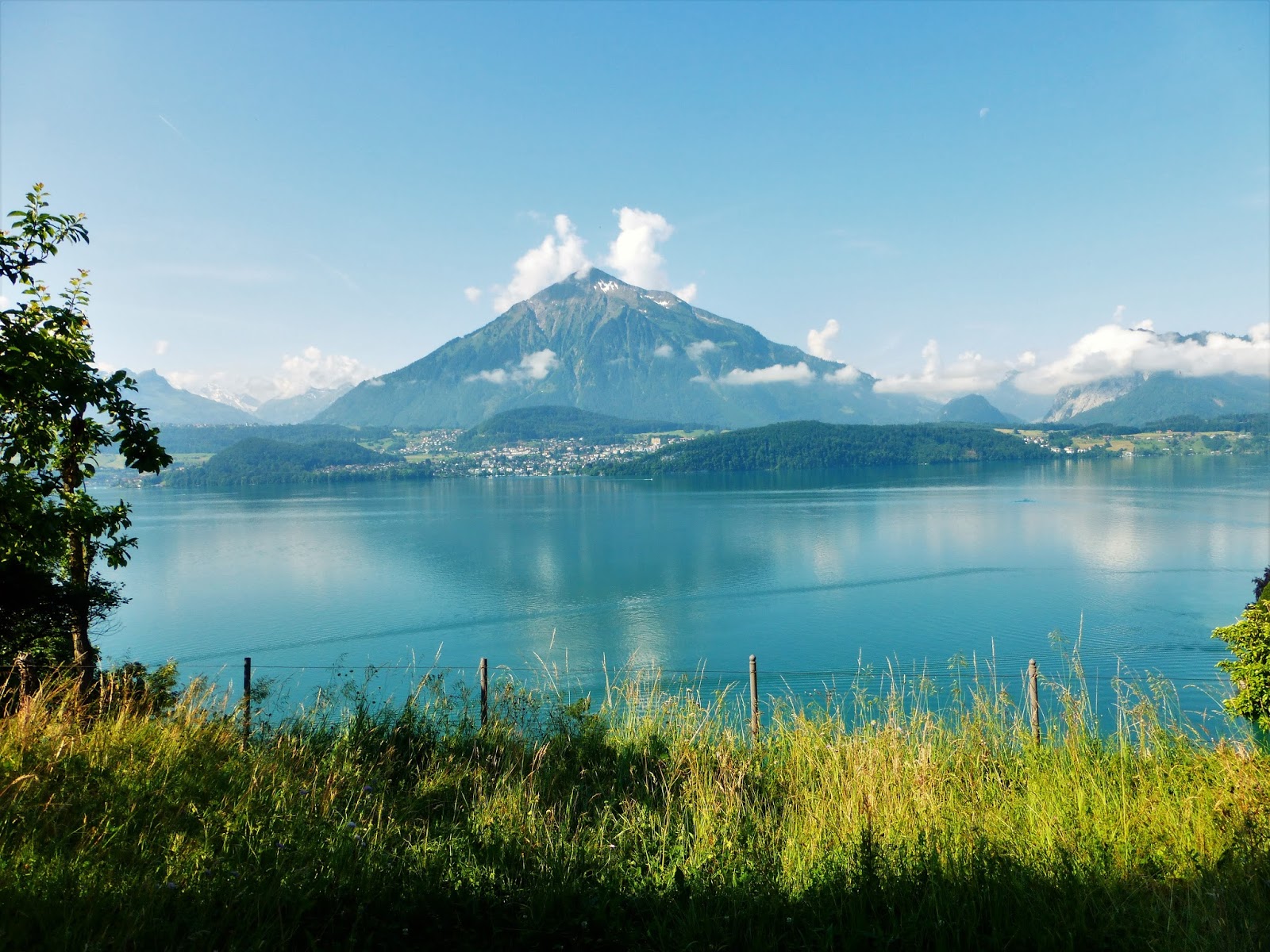
THUNERSEE  SWITZERLAND
One of our favorite Airbnb finds was a chalet in the mountains of Switzerland overlooking the Thunersee. There were only two reviews (good ones), and it was perched above the town on a mountain that could mean a very steep hike to get there. However, the view was spectacular, and the owner answered every question to my satisfaction (we could ride the local bus and avoid the uphill walk). It was still a risk, but one we were glad we took.


       Another excellent place was in Sydney, Australia; it had a balcony, pleasant view, and great host. It was kind of a no-brainer, because it had more than one-hundred reviews with a five-star (best) average. Here is the website to “Central+Surrey Hills+Views.”


       In Melbourne, Australia we rented a comfortable two-bedroom apartment with a great view of the city. “Beautiful City + Park Views + Pool” with its 80+ five-star reviews can be found here.


BOB'S COLLECTION CAPITOL REEF NATIONAL PARK
         One of the more unusual places we rented was a studio apartment at the edge of Capitol Reef National Park in Utah. It overlooked colorful canyons and ridges that dated back 65 million years. We even had a lesson in Triassic paleontology from our delightful host, Bob. Here is                                                               the website.


      What are your experiences with Airbnb? Any favorite places to recommend?
CAPITOL REEF NATIONAL PARK UTAH

Related My Vintage Journey blogposts:

Tapestry of Utah & Capitol Reef National Park - August 19, 2015
Anticipating a Vintage Journey to Australia - December 6, 2014

RECENT CONCERNS ABOUT AIRBNB:
  See Report dated February 3, 2020:  "Scale of Airbnb's scam problem detailed in the new Vice Report."   ---from property bait & switches to excessive repair costs.

Note from Vintage Journeys about Airbnb: We personally had a bad experience with Airbnb in Rome when we were charged $275 for plumbing fees because our toilet backed up. Finally, they agreed that we would not have to pay for it, but it was not a pleasant experience.   


Wednesday, April 27, 2016

CORONADO PUBLIC LIBRARY--A VINTAGE TREASURE

"CANASTA DE FLORES"
BY ALFRED RAMOS MARTINEZ


CORONADO PUBLIC LIBRARY
     The Coronado Public Library (640 Orange Ave.) is one of the most beautiful libraries around. It was designed over 108 years ago in a classic revival style by architect Harrison Albright. Although it has been renovated on many occasions, the simplicity of the  large white columns and front portico have prevailed.
      The grounds are beautifully landscaped with huge old trees, including a rare Torrey pine and colorful blooming roses. The whimsical 14-foot-high sculpture of a sea dragon called “Imagine” is located near the front sidewalk and is on loan from Lemon Grove artist, Ken Kraber. It is one of many pieces of artwork that can be enjoyed here.
"IMAGINE" BY KEN KRABER
      The building, as well as the spacious block of surrounding park area, was a gift to the citizens of Coronado by sugar and shipping magnate John D. Spreckels in 1909. The library is directly across the street from Spreckels Park, also donated by Spreckels, who owned much of Coronado in the early 1900s, including the Hotel Del Coronado. The John D. Spreckels Center, which replaces the former Senior Center, is currently under construction to the west of the library.
      
"EL DIA DEL MERCADO"
BY ALFRED RAMOS MARTINEZ
When entering the library lobby, the first thing you will notice is an impressive 48-foot-long mural by Alfred Ramos Martinez called “El Dia del Mercado.” This fresco masterpiece was painted in 1938 for the walls of the popular, La Avenida Cafe, that closed in 1990. After careful transport and restoration, that involved cutting it into five separate sections and loading it into a crate before it was sent to storage. It was acquired and installed at the newly renovated and expanded Coronado Public Library in 2005. 

       A second painting by Martinez, “Canasta de Flores,” is attractively installed in the main section of the library. This colorful floral mural, which was covered by wallpaper and paint in the old cafe's cocktail lounge, was discovered by accident because it was covered with wallpaper. It was also restored, and then purchased by the Friends of the Library when the library was renovated.

     
SPRECKELS READING ROOM
The original charm of this building is still evident when you enter the Spreckels Reading Room, located in the older section of the building. It is now a comfortable and peaceful area with leather chairs, work tables, wooden bookcases, artwork, large windows, white walls, and a skylight high above.

      I have a special appreciation for the scenes from the Wizard of Oz, by artist Brenda Smith, that are printed on glass, and installed as suspended panels as you enter the children's library. I also enjoy the display case that changes with the season and is currently a Fairytale Tea Party. It reminds me of the Christmas windows we used to enjoy at Dayton's in downtown Minneapolis when I was young. I like to bring my granddaughter, Mila, here for the popular storytimes. Afterwards, she especially likes to watch the model train that circles above the bookcases in the children's section.

       Also of interest to visitors are the rotating exhibits to view in the gallery as you enter the main library. They change every six to eight weeks; currently on display is The Art of Album Covers. Recent exhibits have included: Designed by Edith Head, the Art of Folk Costume; and World War II in Words and Pictures.

      The Coronado Public Library is open every day of the week, including four weekday evenings until 9 p.m. It offers a wide range of services, databases, lectures, and special programs that are provided free of charge. Information can be found on its website.

      The annual Friends of the Library Book Sale is held annually on the third weekend of April; raising $33,000 for the library in 2016.  It is one of the largest in the country with thousands of books, CDs, and DVDs for sale. It is held in tents located directly across the street from the library in Spreckels Park on the same weekend as the popular Coronado Flower Show.

The only thing that you absolutely have to know, is the location of the library.” -Albert Einstein
CORONADO PUBLIC LIBRARY
Revised July 15, 2017


Wednesday, April 13, 2016

DOWNTOWN PARKS & SPECIAL PLACES WITH MILA


San Diego County Administration Center
  One of the most impressive and noteworthy downtown buildings is the San Diego County Administration Center (1600 Pacific Hwy.). It was built during the Great Depression with funding from the Works Progress Administration and was completed in 1938; often referred to as the Jewel of the Bay because it fronts San Diego harbor, it's particularly stunning after dark when the lights are on. The style is considered Spanish Revival which is identifiable because of its smooth plaster (stucco) walls and semi-circular arcade above the entry way. The Beaux Arts influence is apparent from the mosaics, sculptures, and grand entrance. A massive statue “The Guardian of Water” by Donal Hord stands at the front entrance. This pioneer woman holding a water jug is one of my favorites.
Waterfront Park

       I love this building, however, the real reason for a visit today is the magnificent 12-acre County Administration Waterfront Park located on the grounds to the north and south. Recently completed in 2014, it is the largest downtown park after Balboa Park. With fountains, open grassy areas, gardens of drought tolerant flowers, picnic areas, playground, and large mosaic sculptures by Niki de Saint Phalle, it is truly a children's paradise.


With a park like this only a ferryboat ride away, and a granddaughter who is at the “love parks” stage, I was excited to take Mila on another excursion. She is now 22-months-old and still loves to go places. Mila managed to convince me that she needed to bring her two dolls, Stella and Raggedy Andy, with her to the park today (I have enough trouble keeping track of her without worrying about losing a doll.) It turned out fine, because she clutched the dolls tightly most of the time and was proud to have “two friends” with her at the park.

       We arrived at the Broadway Pier at 9 a.m.; Mila and her dolls rode in the stroller as I walked along busy Harbor Drive. She looked quite small compared to the huge cruise ship that was docked at the harbor for the day. We passed the Maritime Museum with its historic Star of India, B-39 Submarine, and Steam Ferry Berkeley. After a few blocks, we crossed Harbor Drive to visit the Waterfront Park. Unfortunately, all of the famous water fountains were closed for maintenance. We hope to return soon to see the fountains.

      
"Dragon" by Niki de Saint  Phalle
We then walked to the south side of the building where the playground equipment, picnic tables, and interactive water pool are. It was a rather quiet Wednesday morning in March, which was good because protecting Mila from all the other active children in a park can be a challenge. There is a large circular hill that kids can climb up on, and then large slides to get down on. It is made of that cushy shock absorbing surface that you find in the latest parks around the country. The slides were large and fast. Mila. Andy, Stella, and I went down the large double slide together a couple of times. I decided not to continue because I almost fell at the bottom, and was afraid that I might end up on top of Mila. We'll leave this slide for another day. There were a couple of toddler swings that she enjoyed. The nearby interactive fountains that kids are allowed to play in were also closed for maintenance. This was probably just as well because she would have been tempted to jump in, and I didn't bring a towel or dry clothes along—that will wait for another day too.

       At this point I was ready for a break, so we walked south to the Headquarters at Seaport Village, and stopped at my favorite downtown Starbuck's. This worked well, because Mila's mom had sent snacks, and she was delighted with the Starbuck's milk. I enjoyed a coffee. We sat together on a high stool and watched people.

      
Next, I decided that we should find out what the small Children's Park is all about. It was another six blocks further south and located directly in front of the Children's Museum and across from the convention center. It is a pleasant, fenced-in little park; however with all of its rope climbing, it is designed for children older than Mila. She had the most fun observing the frequent MTS Red Trolleys pass by on the nearby train track.

      From here we headed down toward the 5th Avenue Ferry landing, which is near the Convention Center. I kind of expected Mila to fall asleep in her stroller along the way, so I could relax, read, and perhaps have some lunch, but no such luck. I guess downtown is just too exciting.

       We arrived at the ferry landing just in time to catch the 1 p.m. departure which was quite full. I decided to try to get on and let the driver help with the stroller. Unfortunately, they were using the small ferry that does not have a ramp and her stroller needed to be lifted in. This is one of the very rare times I have used her “baby SUV” stroller. It's too big and heavy to be practical in my opinion. We have a small, light-weight stroller that I usually use that can be folded and lifted easily while I am still holding Mila. Anyway, we made it on, but the captain was not very happy with me.

       We were the first ones off and then Mila, who had been clutching her two dolls during the entire day, accidently dropped Raggedy Andy. I thought it had fallen right into the water, but by some miracle, it got caught between the ferry and the dock, preventing the disaster. I bent over and picked it up for her.


       Well, we survived the trip, and I think I needed a nap at the end more than she did. Next time, we will ride a Red Trolley to Old Town. She'll love it and so will I.
Maritime Museum


Cruise Ship - San Diego Harbor
Related Posts: Special Days with Mila at Balboa Park
                                   July 24, 2015

                        Visiting Balboa Park with a Special Person
                                  November 27, 2014


Wednesday, March 30, 2016

A TRIP TO TUCSON IN THE DESERT


MISSION REVIVAL HOME
DOWNTOWN TUCSON


      Ron and I recently drove to Phoenix to babysit Mila while Anna and John attended a conference. We were delighted to do so, and we were also pleased to receive an unexpected email from a special cousin, Kathy. She informed us that she and her husband, Karl, were in Tucson. We gladly changed our plans and headed to Tucson after Phoenix so that we could join them for dinner. Kathy prepared one of her great meals that included salmon from Alaska. In addition to the meal, they entertained us with stories about their life in Alaska and visits to Sweden.

      We stayed at the Fairfield Inn in Oro Valley, which is about ten miles north of Tucson. I enjoyed the morning walks along paths through the desert, and the well-groomed neighborhoods with interesting cacti along the way. For me, the unattractiveness of the desert sand is somewhat compensated by the fascinating range of shapes, colors, and sizes of cacti and nearby mountains. I was brought up in the Midwest, where we only occasionally saw a cactus planted in an indoor pot, so to see all the varieties growing naturally is quite a treat for me.

     
NATURAL ROCK SCULPTURES
MT. LEMMON SCENIC BYWAY
      On the first day, Ron and I drove up the Mount Lemmon Scenic Byway. This beautiful route is considered one of the most scenic drives in southeastern Arizona. The sharp change in landscape from desert to the Coronado National Forest in just 27 miles is amazing. At the summit is Mount Lemmon Ski Valley (9,157 feet); this is the southernmost ski area in the U.S. It was open for only eight weeks this year (they don't make snow) which is considered a good year. It was open for two weeks last year (not such a good year). There is no grooming here, and the winter temperatures range from 20-50F with an average snowfall of 180 inches. These variable temperatures would make even the easiest ski run a challenge.
    
   
WALL PAINTINGS ON HOMES

A 30-minute drive to the center of Tucson was on my agenda for our last morning. That's because I read about the historical walking tour of downtown Tucson called the Turquoise Trail (formerly called the Presidio Trail) which is marked by a strip of paint that is a two and one-half mile loop through downtown. The trail begins at the Presidio San Augustin del Tucson that was founded by Spanish soldiers in 1775. It was under Spanish control until the Mexican-American War of 1846.


ADOBE HOME
DOWNTOWN TUCSON
      The trail is designed as a loop, but it can be done in segments. It was easy to spot the turquoise strip to follow, and I immediately discovered some old adobe buildings that were built in the late 1800s. Adding to the interest were the colorful Mexican paintings that adorned many of the walls. The buildings dated from 1860 to 1920 and included a variety of architectural styles: Sonoran Transitional with its thick adobe walls and narrow window openings; Craftsman Bungalow known for its gable roofs and simplicity of form; Spanish Eclectic that is known for its red-tile clay roofs and arched windows; and Mission Revival with its enclosed courtyards, massive adobe walls and clay roof tiles.


HOTEL CONGRESS DOWNTWON TUCSON
One of the highlights of the walk is the Hotel Congress that was built in 1919 to serve the passengers arriving at the nearby railroad station. It still has the old west charm and is famous for being the secret hiding place for John Dillinger and his gang, until a fire destroyed the third floor of the hotel in 1934 and blew their cover. They were soon apprehended by local police and extradited to Indiana.


      As you walk along, there are restaurants and shops in historic buildings that I had time to only peek at. The two hours I allotted were not nearly long enough to get the full enjoyment for Tucson's famous downtown historical area.
NATURAL ROCK SCULPTURES
MT. LEMMON SCENIC BYWAY
WALL PAINTINGS ON HOMES

Thursday, March 17, 2016

A VINTAGE SHOP IN LITTLE ITALY SAN DIEGO

ARCHITECTURAL SALVAGE OF SAN DIEGO

      There is a shop in Little Italy that reminds me of the antique barns that I used to frequent when driving on the country back roads of Minnesota. There is a big difference, however; Architectural Salvage, is in an old mint-green-stucco building, on the corner of Kettner Blvd. and Kalmai Street, in downtown San Diego—loaded with old artifacts from all over the world, with sophisticated customers who walk around with pads and pencils in hand. They range from interior decorators, restoration enthusiasts, artists to just plain lovers of “old stuff,” like me.

          I was originally attracted to this store when Ron and I were casually walking around the area one day. I happened to notice some old odd-sized doors leaning against the outside wall, and then when I looked inside there were hundreds more in a variety of sizes, colors, and styles. I love old doors, but that was just the beginning. The place was also full of antique sinks, keyholes, door handles, knobs, mailboxes, crates, stain-glass windows, pots, pitchers, stools, tables, benches, doll furniture, boxes, brass-plated numbers, light fixtures, tubs, old keys, and more—all displayed in a fascinating way. It's the most clean and artistically displayed store of old stuff that I've ever seen.
LOTS OF DOOR HARDWARE

     After being in business for twenty years, it is not surprising they have attracted customers from all over the world. They purchase in bulk from faraway places like Egypt and Eastern Europe as well as the U.S.


     One of the delightful things about a visit here is that you can take your time and examine all kinds of fascinating items, even taking photos. No one bothers you, just like the large resident cat who freely walks around the place.
     I also like to climb the old staircase to the second level with its additional artifacts, and to view the entire store from above.
    Due to a thriving business, the products are constantly changing—a good reason to return soon.
VIEW FROM UPPER LEVEL
     I must admit that I have absolutely no space or need for anything in this store. Nor do I wish for space for any of this stuff. I lightened my load many years ago, and I have no desire to go back. I do, however, have a great time visiting this place, so if any of my readers need a personal shopper for a one-of-a-kind treasure, just let me know.
                                                                    * * *

     After spending some time in days-of-old, and even seeing a few antique coffee grinders, I recommend crossing the street to the Bird Rock Coffee Roasters for a taste of something new. That is coffee so good and fresh that the only way to fully appreciate it is to drink it black.

     This new third wave of coffee, that is sweeping the city (on the tail end of the microbreweries), is using some “not-so-new” processes like pour-over, siphoned and cold brewing to make a new perfect cup of java that must stand alone. In addition, they roast their own small batches of beans that hail from specific regional farms throughout the world.

     The first wave of coffee was post WWII, when Folgers and Maxwell House were mass produced for the home coffee drinker. The second wave was Starbuck's and Peet's with their dark roast and espresso-based coffee drinks. Now we're on to the third wave, and I'm not sure if I will fully adjust, but I will give it a try. After all, I always drank my Folgers black when I was young; it was too weak to drink otherwise.


Wednesday, February 24, 2016

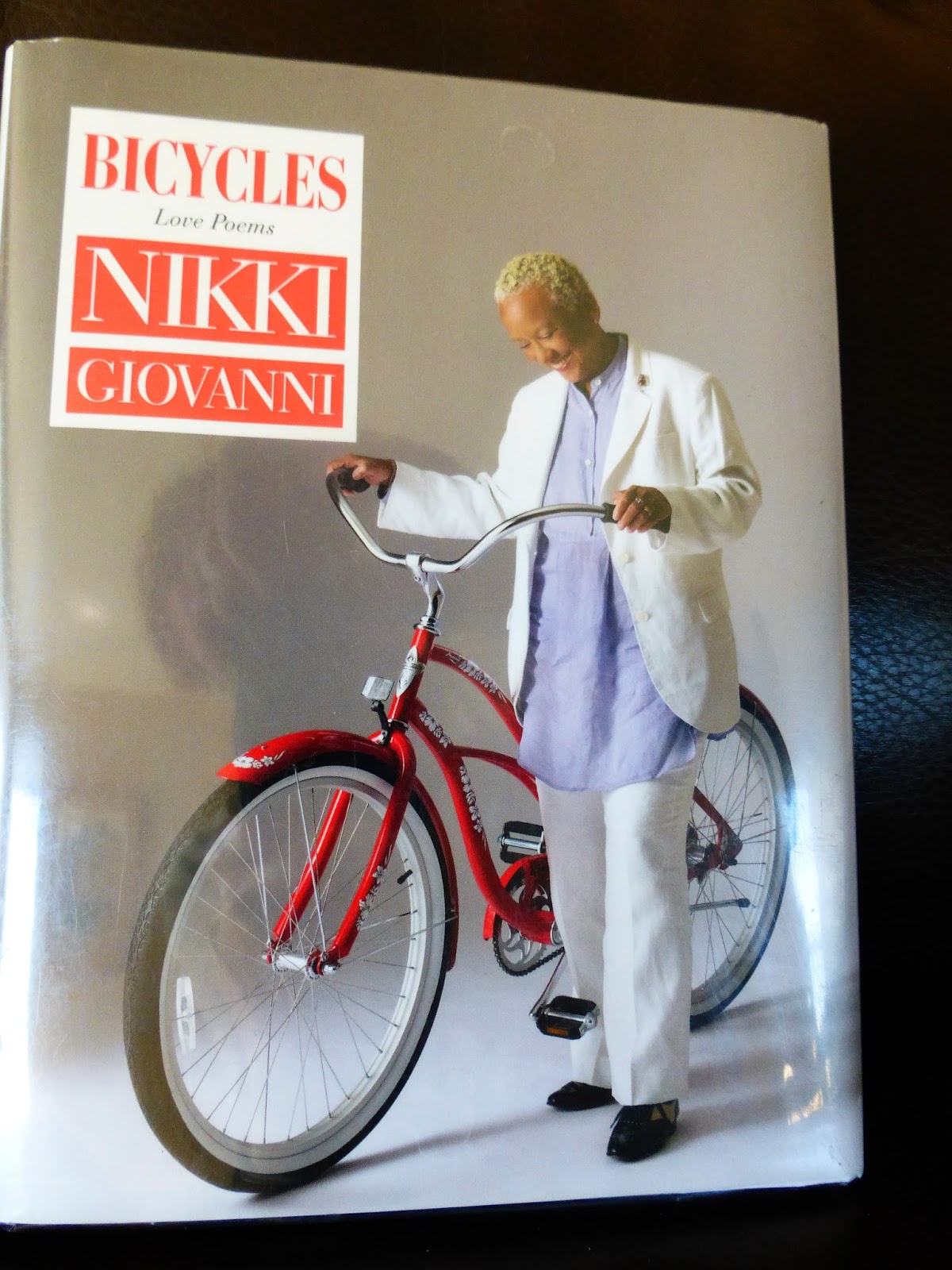
NIKKI GIOVANNI ON RACE, LOVE, AND LIFE

"Bicycles: because love requires trust and balance."

      Nikki Giovanni is an author, commentator, activist, educator, and one of the world's most well known African-American poets. She has written over thirty books and received dozens of awards and honors. She currently is the University Distinguished Professor of English at Virginia Polytechnic University in Blacksburg, Virginia.
      I had the privilege of hearing her speak at the 21st annual Writer's Symposium at Point Loma Nazarene University on February 18. She received a warm welcome as she entered the stage with a lively gait, warm smile, and colorful-red-plaid jacket. 

       She started the evening by reading her poetry (without punctuation or pause) which was followed by a lively conversation conducted by symposium founder and PLNU journalism director, Dean Nelson. She always advises her students to say something that people don't expect them to say, and that is exactly what she did in this interview. She did it with the humor and wisdom that only a 72-year-old woman who is content with where she's at, and has lived her life in love, could do.
      Here are some of my favorite quotes:


      “It's better to take a chance and be wrong than to be safe and dull.”
      “Tell your story as you see it.”
      “Write in love.”
      “Make the stage work for you.”
      “I recommend being black.”
      “I highly recommend old age: it's fun.”
       “I keep trying to learn something new, so that I can share what I'm learning.” (My favorite.)
      When asked why she doesn't use punctuation when writing her poetry, she said, “she assumes her readers are intelligent, and it is to be read as they understand it.”
      “Send notes to let people know you care about them. (How else will they know?)”
      “If I were advising anyone: Write—the deal is you have to write.”
       “Read something everyday. I do.”
       “I am a dreamer and a storyteller.”
       “Remember that everyone is not always going to love you.”
       “I'm not trying to tell people what to do or what to think or none of that. I'm not a leader, I'm not a guru. I'm just a poet looking at the world.”
                                                   * * *
                  
      Travel was not one of the topics; however, she did share that she has the gift of falling asleep easily on long airplane journeys. (I'm jealous of that trait.) She also said that her favorite city is New York, where she used to live, and would live again if she could afford it. She loves to walk and misses her long walks in the city. One more thing: always first class to Hong Kong or Singapore. (It's a 20 hour flight.)

      I also found it interesting that she has volunteered at Warm Hearth Village Retirement Community in Virginia for twelve years. Her writing class wrote and published three books during that time. The students described Giovanni as warm and supportive, her criticism constructive and gentle.
       Thank you, Nikki Giovanni, for traveling across the country to share your life and thoughts with us. It was truly an inspirational and unforgettable evening.
                                                                              * * *

       Videos of previous Writers Symposiums are available online at UCSD TV—2016 will be viewable in approximately one month.