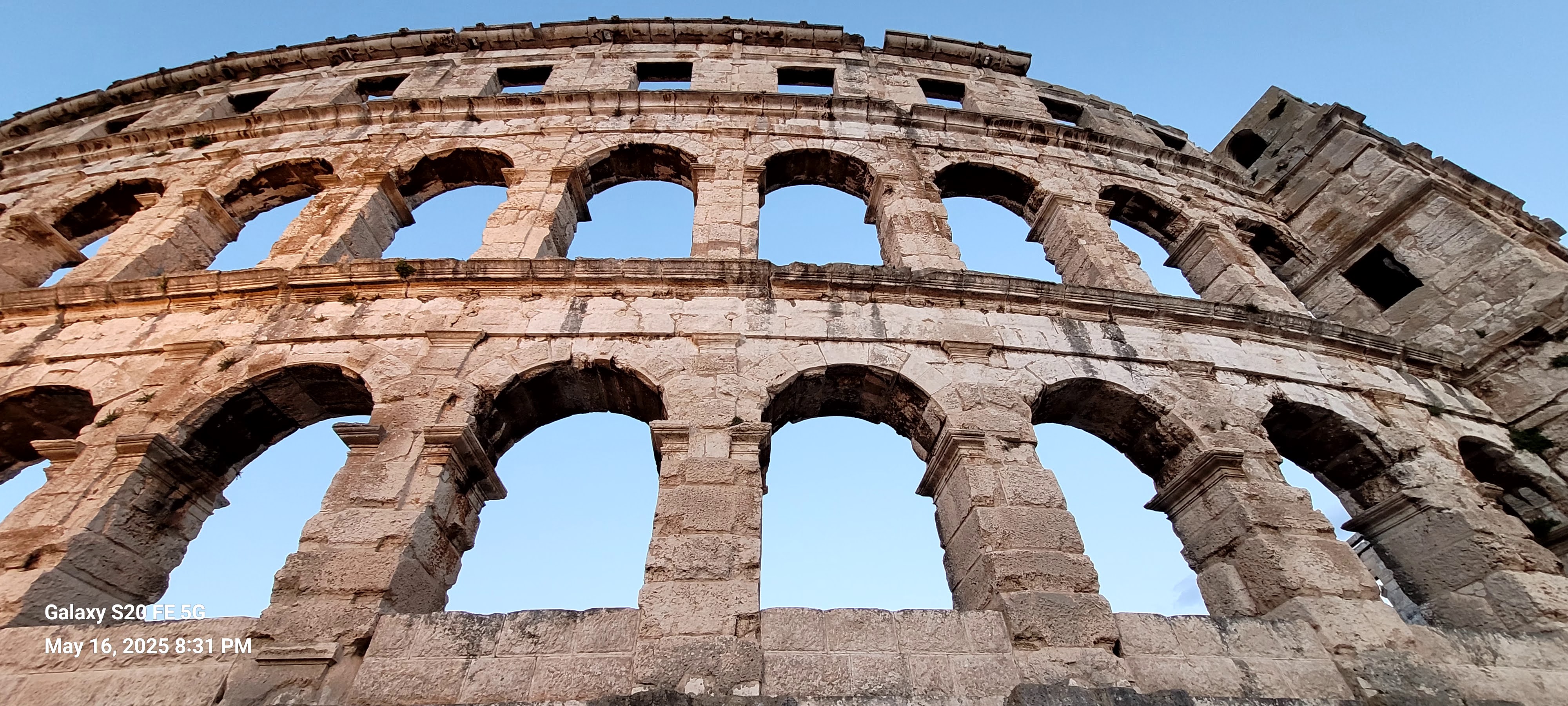
The Pula Arena in Croatia is a spectacular sight--something to remember forever. Passing by it each day during a week-long stay in Pula became a familiar part of each day. There were quiet pauses to look through its massive rectangular windows, catching glimpses of the Adriatic Sea shimmering in the distance. The limestone always carried a bit of surprise, its shades changing with the time of day.
This
amazing Roman amphitheater, also known as the Arena, was built
between 27 BC and 68 AD, about the time the Colosseum was built in
Rome. It lies along Via Flavia, the old road leading to Rome. The
well-preserved oval-shaped structure is considered Croatia's
best-preserved ancient monument. Ranked among the world's six largest
surviving Roman arenas, it is the only one to still have all four
side towers intact.
The
Arena, with a seating capacity of 23,000, was enlarged to accommodate
gladiatorial fights in 79AD. These brutal contests of gladiators
(often prisoners) fighting with wild animals continued until they
were banned in the 5th century. This was followed by a long period of
neglect and devastation Later
in the Middle Ages, cattle could be seen grazing in the Arena along with occasional tournaments and medieval fairs. Restoration of
the amphitheater began in the 19th century, and it was restored to
its present state in 1932 with a seating capacity of 7,000
Today, this spectacular setting serves as a venue for numerous concerts, operas, ballets, sporting events, and the Pula Film Festival, one of
the oldest film festivals in Europe. In addition, the tradition of
gladiator fighting lives on in Pula when the Spectacvia Antiqua comes
to town every summer and fall.
This picturesque setting ranks among the most beautiful and distinctive venues in the world. May the harmony between history and modernity continue to prevail in this charming ancient town by the sea.